
Backpack Safety for Kids: How to Wear a Backpack the Right Way
Back-to-school season means new clothes, school supplies, busy schedules—and, of course, backpacks.
However, when backpacks are overloaded or worn incorrectly, they can place unnecessary stress on a child’s neck, shoulders, and back. Fortunately, a few simple adjustments can make a big difference.
At APM Sports Chiropractic in North Haven, CT, we want parents to know what to look for when choosing, packing, and adjusting their child’s backpack. Here are some simple backpack safety tips for kids to help them start the school year comfortably.
Why Proper Backpack Fit Matters for Kids
We’ve all seen kids walking around with backpacks that look almost as big as they are.
When a backpack is too heavy or hangs incorrectly, a child may compensate by leaning forward, rounding their shoulders, or changing the way they walk. As a result, extra stress may be placed on the muscles and joints of the neck, shoulders, and back.
Over time, an improperly fitted or overloaded backpack may contribute to:
- Neck pain
- Shoulder pain
- Upper or lower back discomfort
- Muscle fatigue
- Poor posture
The goal isn’t to eliminate backpacks. Instead, it’s to make sure kids are carrying them as comfortably and efficiently as possible.
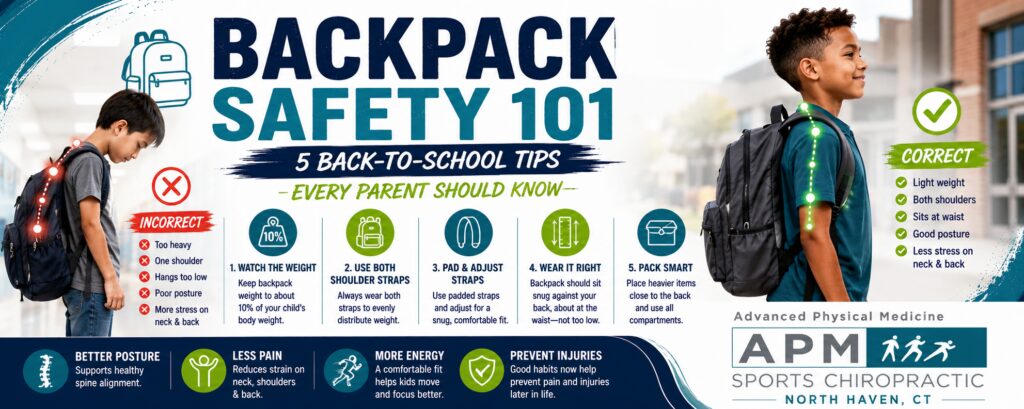
1. Watch the Weight of Your Child’s Backpack
First, consider how much your child’s backpack weighs.
A commonly used guideline is to keep a loaded backpack around 10% of a child’s body weight, although some recommendations allow up to 15% depending on the child and circumstances.
For example, if your child weighs 80 pounds, aiming for a backpack around 8 pounds is a reasonable starting point.
If the backpack is getting too heavy, look for items that don’t need to travel back and forth every day.
Ask your child:
“Do you actually need everything that’s in here today?”
Removing unnecessary books, notebooks, electronics, water bottles, and other items can quickly lighten the load.
2. Use Both Shoulder Straps
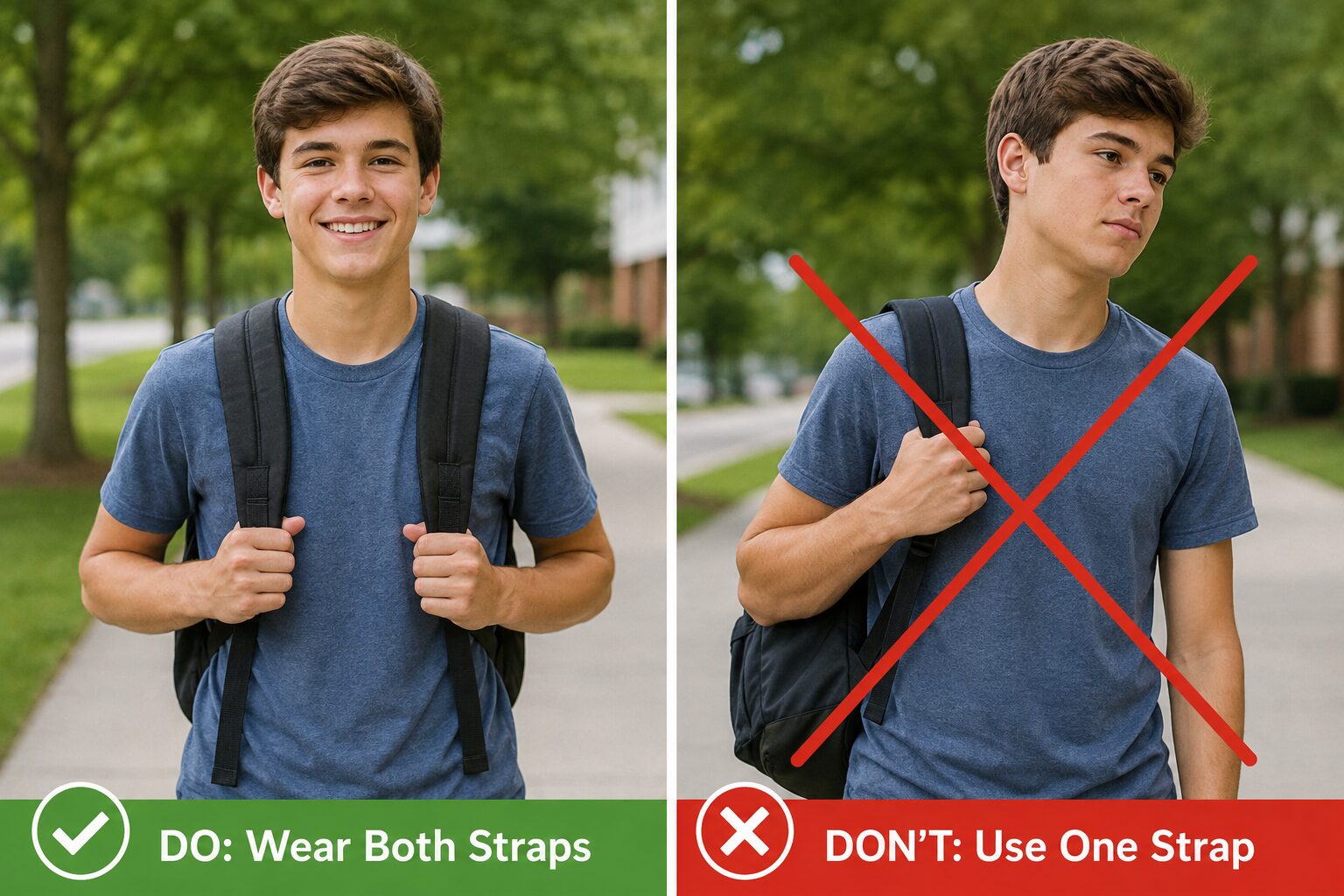
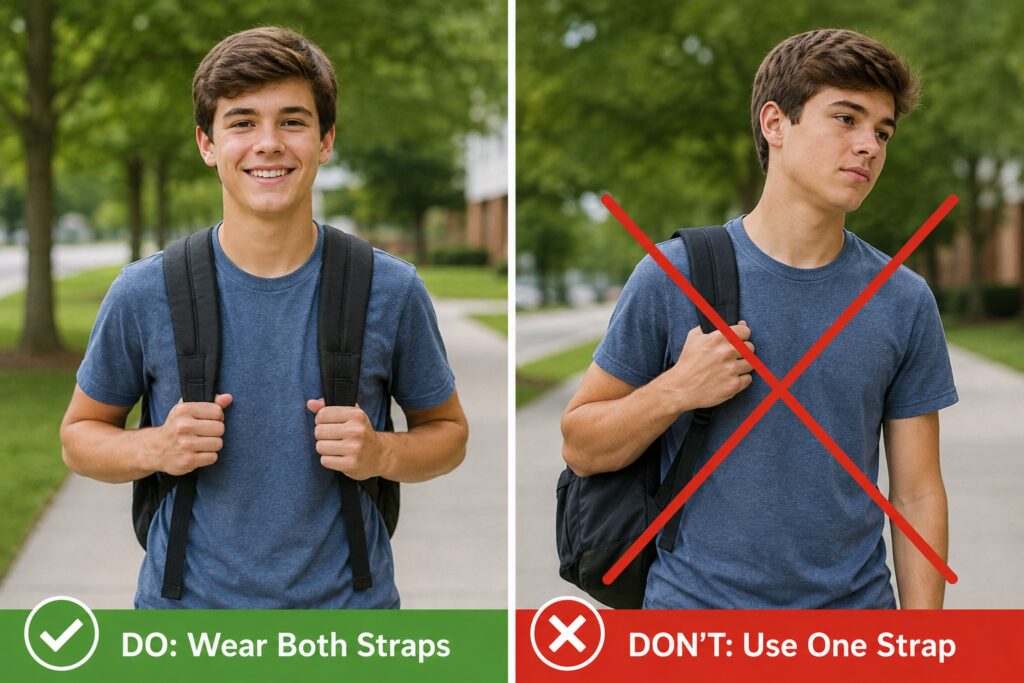
We know wearing a backpack over one shoulder might look easier or feel more convenient. However, using only one strap distributes the weight unevenly.
Instead, encourage your child to wear both shoulder straps.
Using both straps helps distribute the backpack’s weight more evenly across the shoulders and allows the body to stay in a more balanced position while standing and walking.
3. Choose Padded, Adjustable Backpack Straps
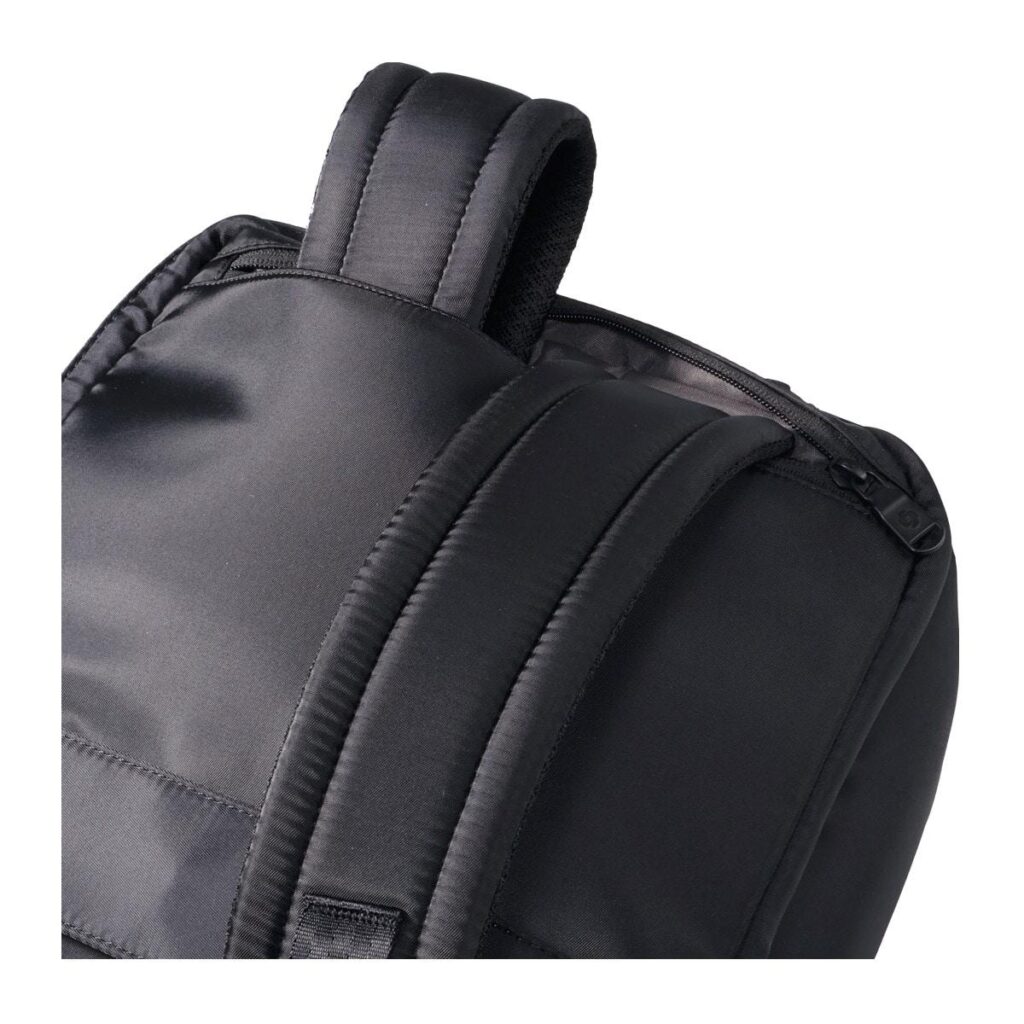
Next, look for a backpack with comfortable, padded shoulder straps.
The straps should also be adjustable so the backpack can be positioned appropriately for your child’s size. Avoid extremely loose straps that allow the backpack to hang far away from the body.
In general, the closer the backpack sits to the body, the easier it is to carry.
Additionally, as your child grows throughout the school year, check the straps periodically and readjust them when needed.
4. Don’t Let the Backpack Hang Too Low
Where the backpack sits matters just as much as how much it weighs.
A backpack hanging too low can pull the body backward. Consequently, a child may compensate by leaning forward or changing their posture.
Ideally, the backpack should sit snug against the back, rather than hanging down toward the child’s hips or thighs.
If the backpack is bouncing or swinging around while your child walks, the shoulder straps may need to be tightened.
5. Pack Heavier Items Close to the Body
How you load the backpack can also make a difference.
Place heavier items—such as textbooks, laptops, or large binders—closest to your child’s back. Then, use the other compartments to organize smaller and lighter items.
Keeping heavier objects closer to the body helps prevent the load from pulling the backpack away from the spine. It can also make the backpack feel more balanced while your child is walking.
6. Pay Attention to Your Child’s Posture
Once the backpack is loaded and adjusted, take a quick look at your child while they’re wearing it.
Are they:
- Leaning significantly forward?
- Rounding their shoulders?
- Shifting toward one side?
- Complaining that the straps hurt?
- Struggling to put the backpack on?
- Complaining of neck, shoulder, or back pain?
These can be signs that the backpack is too heavy, doesn’t fit correctly, or simply needs to be adjusted.
Most importantly, a properly fitted backpack shouldn’t dramatically change the way your child naturally stands or walks.
Backpacks, Phones, and the Back-to-School Posture Problem
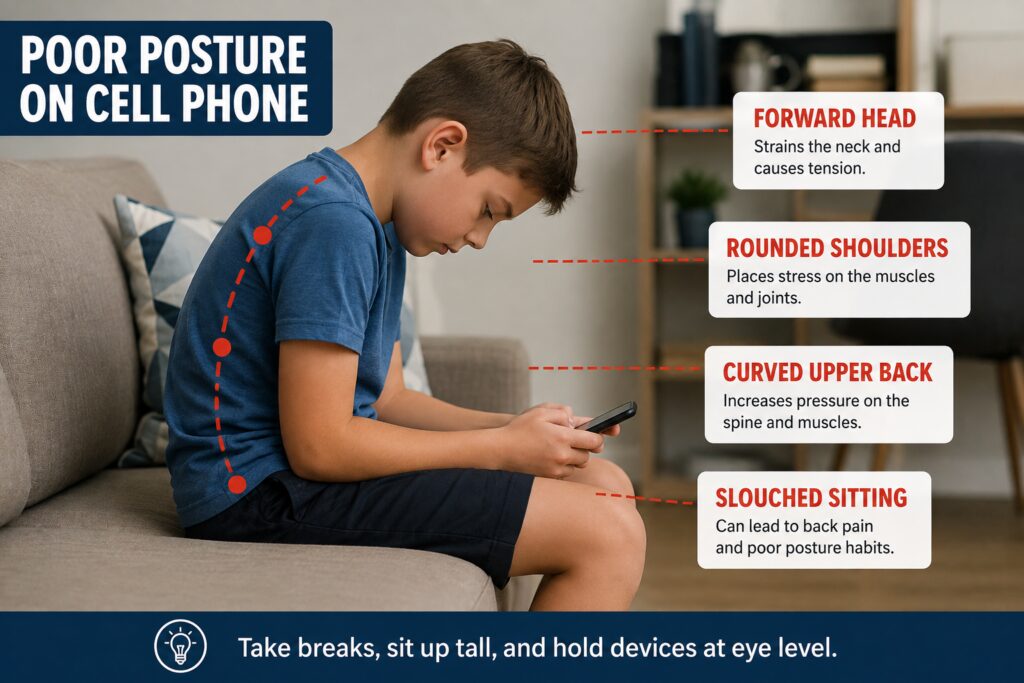
Of course, backpacks aren’t the only thing affecting students’ posture.
Throughout the school day, kids may spend significant amounts of time sitting at desks and looking down at:
- Phones
- Tablets
- Laptops
- Homework
- Video games
When you combine long periods of sitting and screen time with a heavy backpack, it’s easy to see how neck, shoulder, and back discomfort may develop.
Therefore, parents should think about the entire school day, not just the backpack.
Encourage regular movement breaks, comfortable sitting positions, physical activity, and less time spent hunched over phones and other devices whenever possible.
What If Your Child Already Has Back or Neck Pain?
Occasional soreness after a long or busy day can happen. However, recurring neck or back pain shouldn’t automatically be dismissed as part of growing up.
If your child consistently complains about neck, shoulder, or back pain—or you’ve noticed significant changes in their posture—it may be worth having them evaluated.
At APM Sports Chiropractic in North Haven, Connecticut, we work with children, teens, and student athletes to evaluate movement and postural issues and determine what may be contributing to their symptoms.
Depending on the individual child, care may include:
- Posture evaluation
- Chiropractic care when appropriate
- Soft tissue treatment
- Stretching
- Mobility exercises
- Strengthening and postural exercises
- At-home recommendations
Rather than taking a one-size-fits-all approach, our goal is to determine what’s contributing to the problem and help kids move well, feel good, and stay active.
Back-to-School Chiropractic Care in North Haven, CT
A new school year is a great opportunity to establish better habits.
Before your child heads out the door, remember four simple backpack safety tips:
Lighten it. Adjust it. Wear both straps. Keep it close.
Those simple steps can help make carrying a backpack more comfortable and reduce unnecessary strain on your child’s neck, shoulders, and back.
If your child is experiencing recurring neck pain, back pain, shoulder discomfort, or posture problems, APM Sports Chiropractic in North Haven, CT is here to help.
Contact APM Sports Chiropractic today to schedule an evaluation and help your child start the school year moving and feeling their best.
Be The First To Comment